Step 1
Pet Zone Assessment and Drainage Planning
We evaluate how water moves across the pet zone, check for existing drainage infrastructure, and design a base and drainage system that will handle daily pet use without odor or saturation problems.
Loading content...
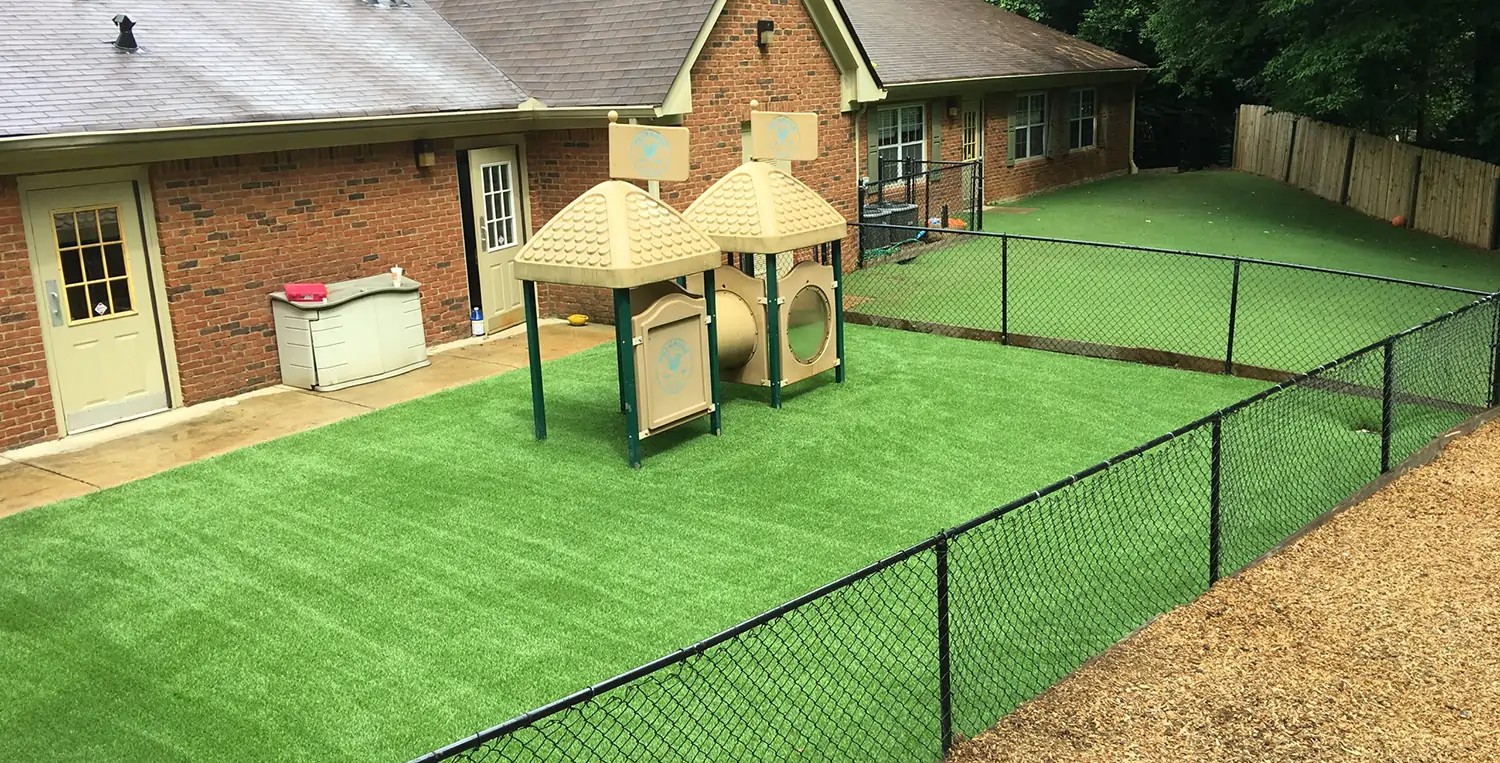
Pet turf installation designed for Tomball households — practical drainage systems and durable surfaces for families juggling LSCT schedules, HCA Tomball shift rotations, and the pets that share their properties.
Pet turf installation in Tomball addresses one of the most common practical problems in the LSCT and HCA Houston Healthcare Tomball employee households: a backyard that works for dogs in a climate that makes natural grass maintenance unsustainable. Nurses and medical technicians on twelve-hour shifts at HCA Tomball do not come home to a yard that needs spot-treatment for pet damage, patching for bare spots, or treatment for the drainage problems that develop when pets repeatedly use the same lawn areas. Faculty at Lone Star College Tomball, managing semester teaching loads and office hours, are in the same position. Pets are part of the household — and a pet-dedicated outdoor surface needs to handle that use reliably without becoming a maintenance project in itself. Pet turf installation from Turf Installation of Tomball is designed specifically for this use profile. The difference between pet turf and standard residential turf installation is meaningful: the drainage system is built for higher liquid volume and faster throughput, the infill product is selected for antimicrobial performance and odor resistance, and the turf fiber and backing specifications are chosen for durability under consistent pet activity rather than occasional foot traffic. For households in the Northpointe neighborhood near the LSCT campus, the Treeline and Wildwood communities in the HCA Tomball medical employee corridor, and the Spring Creek properties that connect these two areas, pet turf installation means a yard that stays usable and clean-smelling through Houston's heat and humidity without demanding weekly attention. The installation process for pet turf begins with drainage assessment. In Tomball's clay-heavy soil, standard base preparation is not sufficient for pet turf applications. We excavate to a depth that supports a purpose-built drainage aggregate course, install a drainage fabric appropriate for liquid throughput from pet use, and create a base profile that moves liquids away from the surface efficiently rather than allowing saturation. The turf product is selected from pet-rated product lines with appropriate fiber height and density for cleaning access, backing permeability rated for high-drainage demand, and UV stability for years of direct sun exposure. Infill selection for pet turf is different from residential decorative applications. We use antimicrobial-treated infill products in pet zones and calibrate depth to support drainage performance without creating surface conditions that trap odors or harbor bacteria over time. After installation, we walk through care and maintenance expectations in plain language: what to rinse, how often, what cleaning products are compatible with the turf system, and what to watch for if drainage performance changes. For Tomball households with multiple pets, or with larger dogs who create concentrated use zones, we build pet turf systems that are practical rather than aspirational — surfaces that actually hold up to the use they will receive.
Pet turf installation from Turf Installation of Tomball includes every component of a drainage-optimized, antimicrobial-capable surface system, specified for the actual demands of pet use in Tomball's climate.
Healthcare and education employees in the LSCT and HCA Tomball corridor often describe their pet turf decision the same way: the natural lawn was a maintenance problem that had no realistic solution given their schedules. Bare spots returned within weeks of reseeding, drainage issues made pet zones muddy, and odor became a problem by summer. Pet turf installation from Turf Installation of Tomball addresses those specific problems through infrastructure rather than maintenance habits. The drainage system moves liquid through efficiently, the antimicrobial infill manages odor, and the turf surface stays clean with routine rinsing rather than chemical treatments and reseeding cycles. For multi-generational households in Tomball where both adults work demanding schedules and children also use the outdoor space, a pet turf system that manages itself is genuinely valuable.
Primary local coverage includes Tomball, TX and surrounding communities.
Pet turf installation requires more drainage infrastructure than standard residential turf. Our process is built around that requirement from the first site assessment.
Step 1
We evaluate how water moves across the pet zone, check for existing drainage infrastructure, and design a base and drainage system that will handle daily pet use without odor or saturation problems.
Step 2
The pet zone is excavated to the depth required for a high-performance drainage aggregate course. Base material is installed and compacted, drainage fabric is placed, and the system is verified before turf goes down.
Step 3
Turf is placed in the pet zone with directional consistency, seams are bonded and treated, and edges are secured to prevent lifting or debris accumulation at pet-activity transition zones.
Step 4
Infill is applied and calibrated for drainage performance. We walk through rinsing routines, cleaning product compatibility, and what to expect from the system over the first year of use.
Pet turf installation in Tomball is adapted to the specific outdoor space and use patterns of each household.
Fenced side yards or sectioned backyard areas designated for dog use are the most common pet turf application in the Northpointe and Treeline communities. A dedicated run keeps pet use concentrated and the rest of the yard in better condition.
Households with multiple dogs or large breeds often convert the full backyard to pet turf rather than maintaining a partial system. Full-yard pet turf from Turf Installation of Tomball is designed with drainage capacity to match the full use footprint.
Patios and outdoor living areas shared by pets and family members benefit from pet-rated turf systems at transition zones that drain cleanly and remain easy to hose down.
Pet turf installations cost more than standard residential turf because of the additional drainage infrastructure required. Understanding the specific cost drivers helps homeowners plan accurately.
Larger pet areas require more drainage aggregate, more turf material, and more infill — all of which scale proportionally.
Clay-heavy Tomball soil requires deeper excavation and more substantial drainage aggregate for pet turf applications than sites with better natural drainage. This is the primary cost driver for most pet turf projects.
Households with multiple large dogs may require additional drainage capacity and antimicrobial infill treatment levels beyond the standard pet turf specification. We discuss use profile during scope planning.
Pet-rated turf products with specific backing permeability and pile height requirements, combined with premium antimicrobial infill products, carry higher material costs than standard residential turf specifications.
Turf Installation of Tomball serves pet turf installation projects throughout the Tomball area including Northpointe, Spring Creek, Old Town Tomball, Treeline, Wildwood, and the full LSCT and HCA Tomball medical corridor, as well as surrounding communities including Magnolia, Pinehurst, Cypress, Spring, Klein, Hockley, Waller, The Woodlands, Willowbrook, Jersey Village, North Houston, Conroe, and Humble.
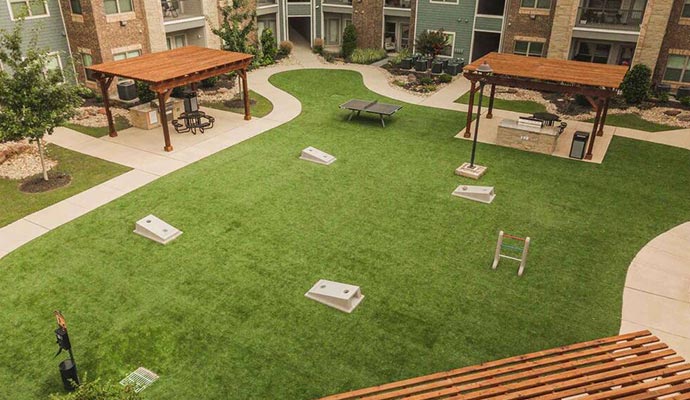
Backyard and front-yard turf systems designed for family use, pets, and low-maintenance living.
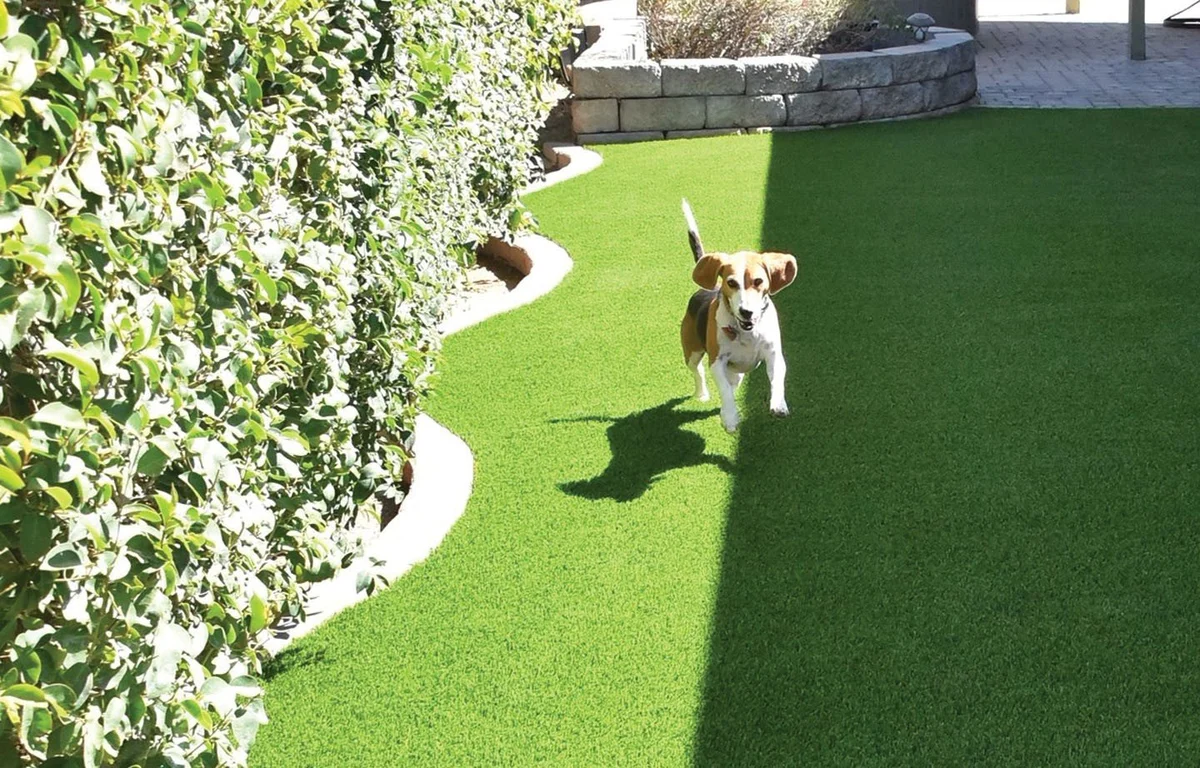
Base correction and drainage preparation for long-term turf performance in Tomball-area soils.
Maintenance and repair support for seams, infill balance, edge conditions, and surface refresh.
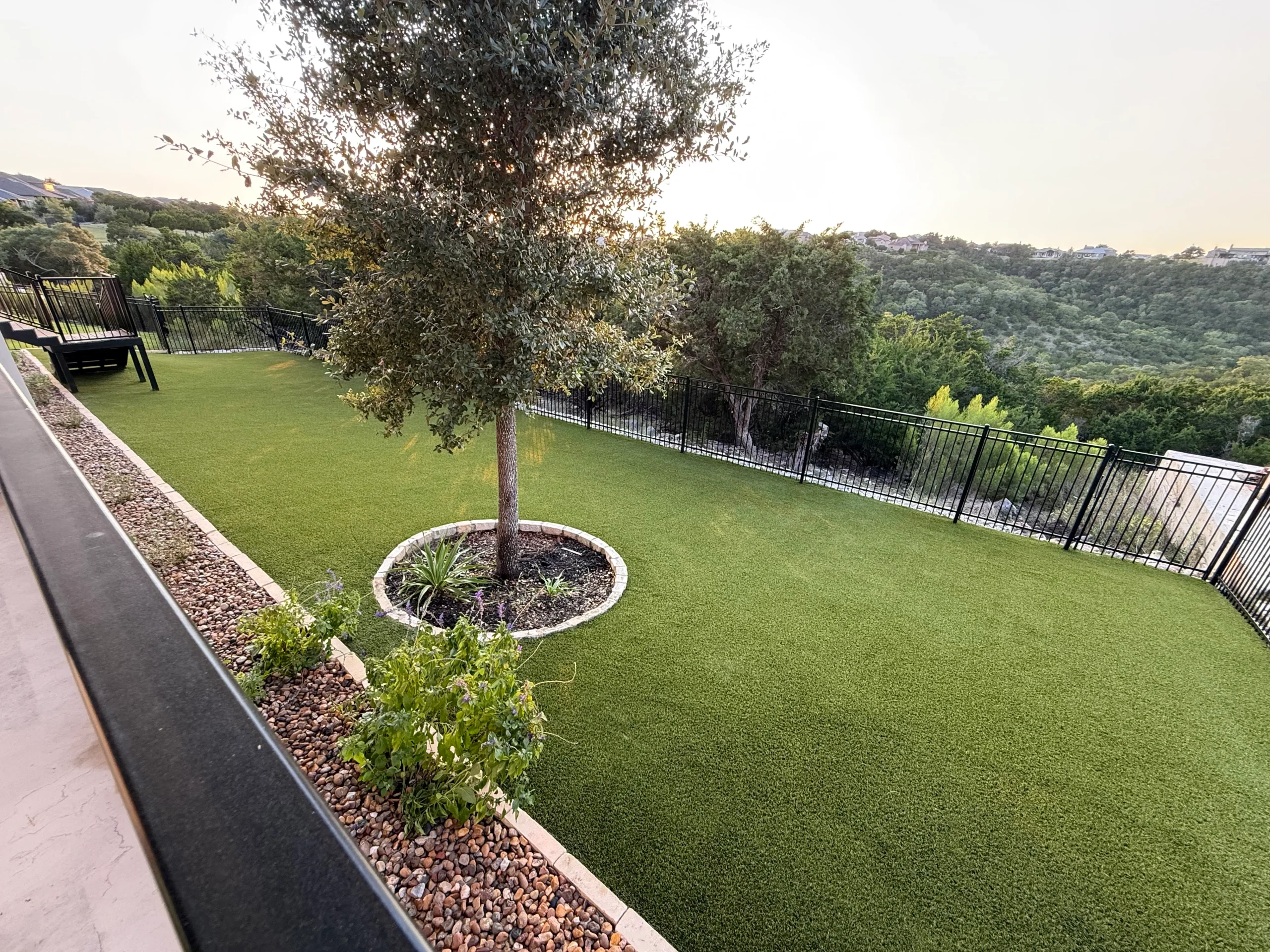
Complete synthetic turf installation for residential and commercial properties in Tomball, TX.
Antimicrobial infill significantly reduces odor buildup, but rinsing is still the primary odor management tool. In Tomball's summer temperatures, we recommend rinsing pet zones two to three times per week. Enzyme-based cleaners are compatible with the turf system and can be used for deeper cleaning when needed.
Tomball clay soil does not drain naturally, so pet turf systems here require a full excavation and installation of a crushed aggregate drainage course. We do not use soil-layer systems for pet turf in this market — they fail within one to two seasons.
Yes, but we typically recommend separating pet-dedicated zones from children's play areas, or specifying the full yard as a combined pet and play zone with appropriate infill. We discuss the best approach based on your yard layout and use priorities during consultation.
Most pet turf installations for a standard backyard area are completed in two to three days. Larger yards or areas with significant existing drainage challenges may take longer. We confirm the timeline during scope review.
We install pet turf with secured perimeter edges and can use bender board or steel edging systems to reinforce borders in properties with dogs that engage with edge transitions. Turf backing materials are pet-safe, and antimicrobial infill products used in pet zones are non-toxic.
Yes. The Klein-Tomball border communities are within our standard service area, and many Klein households with connections to the LSCT or HCA Tomball corridor contact us for pet turf projects.
Share your scope priorities and timeline. We will follow up with project recommendations for your property.
Call